Conversion Scoring & Actions
Built a benchmarking system that shows providers how their plan conversion compares to peers, with permission-aware recommended actions.
Role
Senior Product Designer
Timeline
Dec 2025 to Apr 2026
Team
Titan Team, Lead: Ian Clarke
Scope
Drive 30-day Treatment Plan to Order Conversion
My Role
- Conducted discovery interviews with internal sales team to understand provider pain points
- Led data deep-dive to identify benchmarking opportunities across modalities
- Partnered with data team on visualization design and implementation
- Ran usability tests to validate permission-aware action patterns
- Presented findings and recommendations to executive leadership
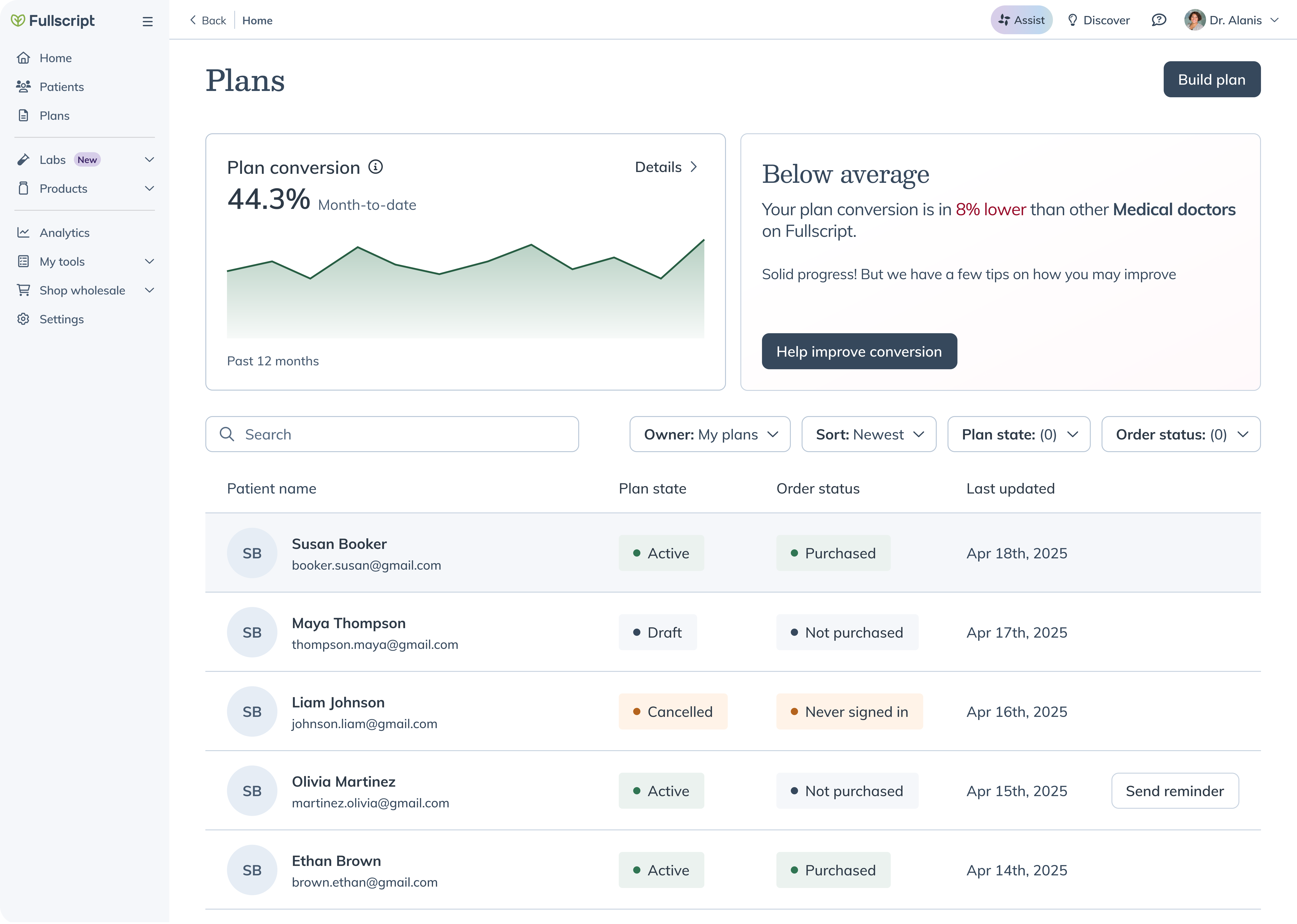
Plans Page with Benchmarking
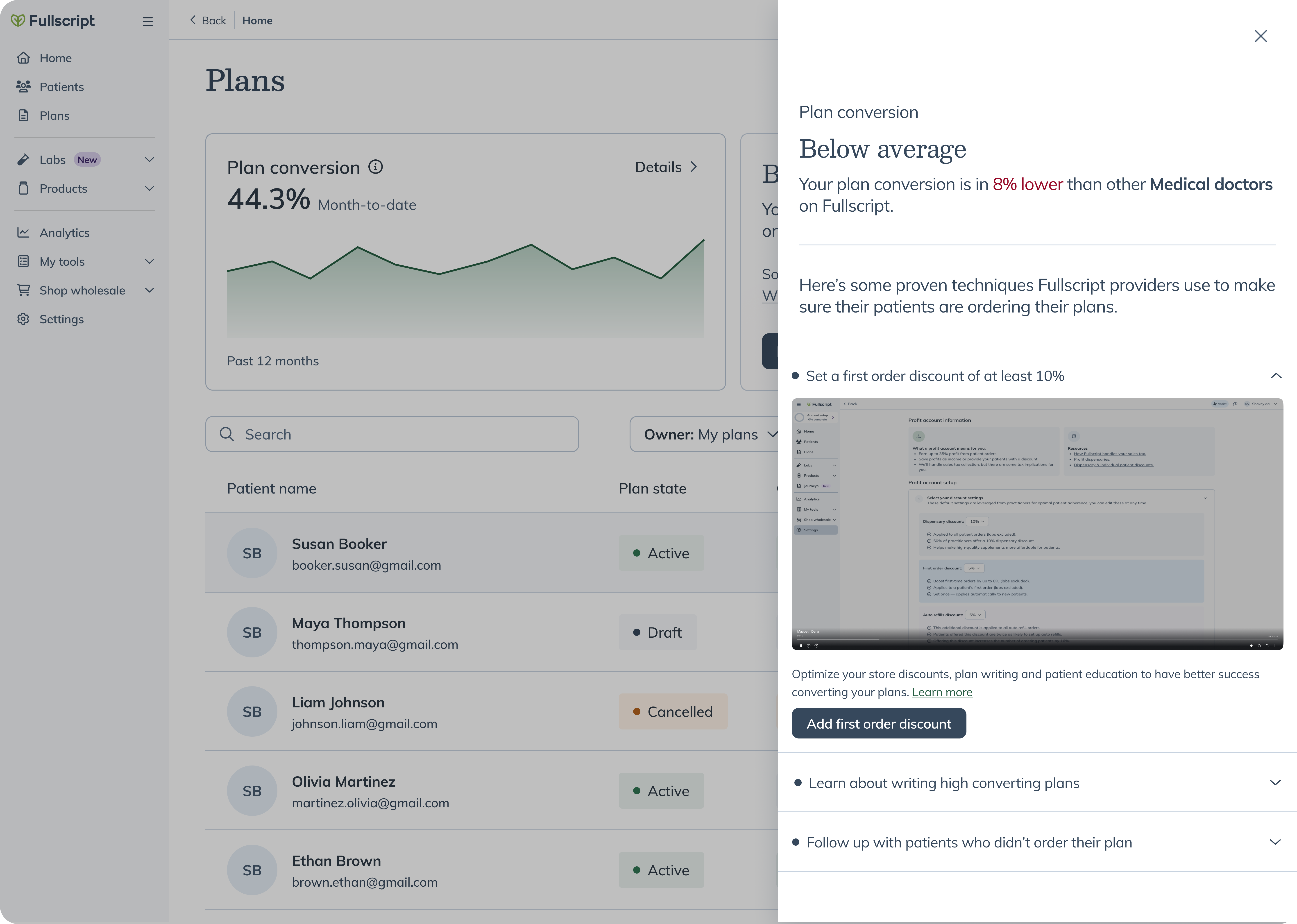
Permission-Aware Actions Drawer
Problem
Providers had no context for their conversion numbers. Is 42% good? Average? Without peer benchmarks, they couldn't tell if they were leaving gains on the table.
Approach
Created modality-specific benchmarks paired with permission-aware actions. Store owners see discount settings; sub-providers see actions within their permissions.
Outcome
Turned a passive dashboard into an active acquisition and retention lever across three distinct action types.
Demos/Week
Providers booking demos with Sales
Context & Problem
Business Context
Part of the Drive 30-day Treatment Plan to Order conversion initiative. Providers across Fullscript operated blind to how their conversion compared to peers in the same modality.
User Context
Healthcare providers (naturopaths, MDs, chiropractors) with varying permission levels. Store owners can change settings; sub-providers and clerks cannot.
Constraints & Complexity
Goals & Success Metrics
Objective
If providers see how their plan conversion compares to peers, especially when behind, more will take optimization actions.
Success Criteria
- 20% of underperforming providers take at least one action
- Measurable conversion improvement for those who act
- Actions feel helpful, not judgmental
100+
Demos/Week
40%
Reminder Utilization
+5%
Patient LTV
Approach
Research
Mapped provider permission structures and identified which actions each role could actually complete.
Benchmarking
Built modality-specific comparisons so naturopaths compare to naturopaths, MDs to MDs.
Action Design
Tailored recommendations to provider state and permissions. No dead-ends.
Surface Placement
Same insights on Plans page and Analytics so providers encounter them in-context.
Gradual Rollout
Not an experiment. Validated assumptions and expanded confidently.
Key Decisions
Critical choices that shaped the final solution
Decision
Store owners see discount settings. Sub-providers see education and plan-template recommendations within their permissions.
Tradeoff
More complex logic but eliminated frustrating dead-ends.
Decision
Built peer benchmarks within the same modality so comparisons felt credible and actionable.
Tradeoff
Required more data infrastructure but dramatically increased trust.
Decision
Surfaced the same insights on the Plans page and in Analytics, meeting providers where they already work.
Tradeoff
Maintained surface consistency across multiple entry points.
The Solution
A two-part system: benchmarks give providers modality-specific comparison framed to be actionable, not judgmental. Recommended actions are tailored to current state and permissions.
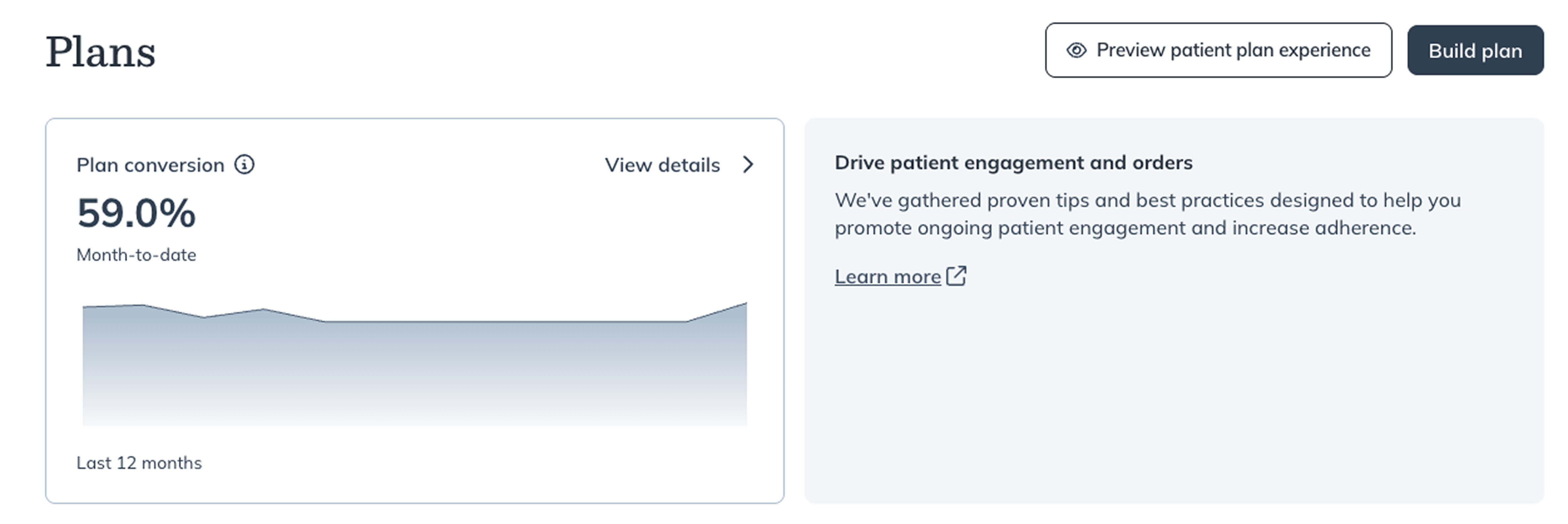
Before: No peer context
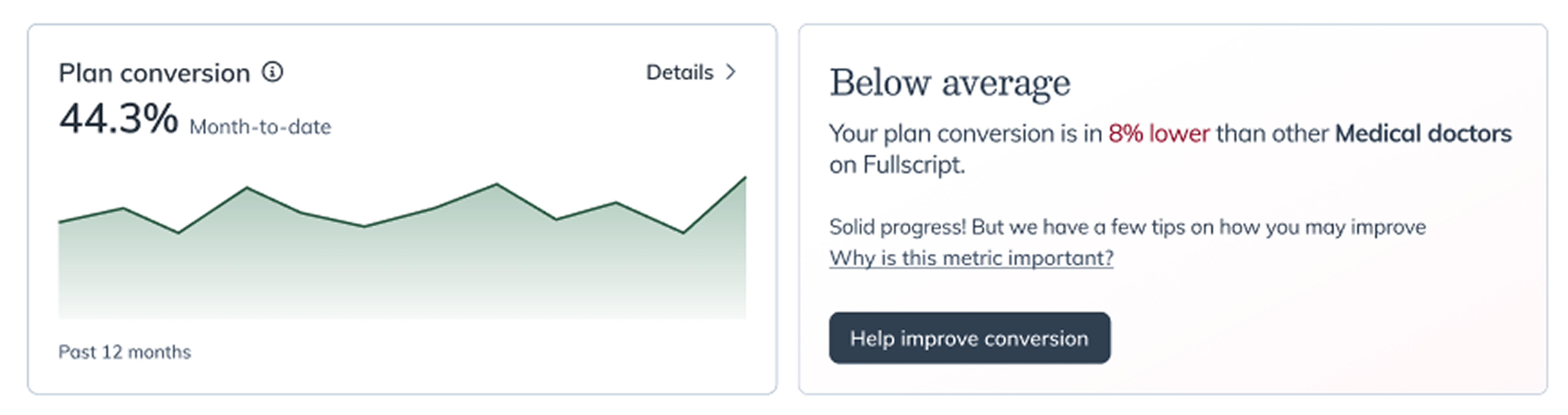
After: Clear benchmark signal
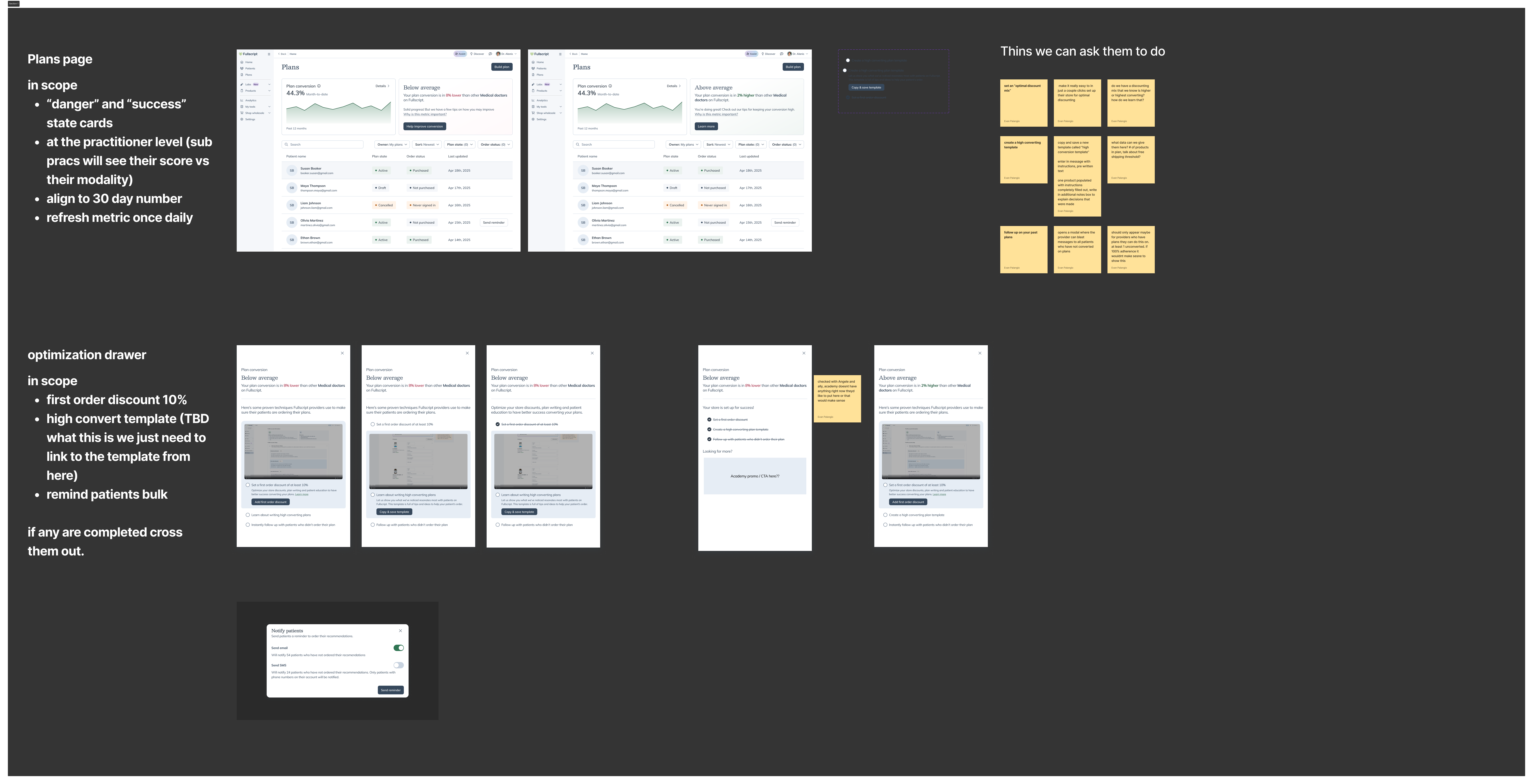
Design Exploration
Outcomes & Impact
Demos/Week
Providers booking with Sales and Growth Onboarders
Reminder Utilization
Nearly half of providers took the bulk reminder action
Patient LTV
From first-order discount adoption
Business Impact
Each recommendation became a branching path into Fullscript's growth model: sales pipeline, reactivation, and pricing. Created a pattern for benchmarked, permission-aware recommendations.
User Impact
Providers don't need more dashboards. They need context plus one obvious next move.
Learnings & Reflection
Recommendations that point providers to talk to a human became a standing pipeline of high-intent onboarding conversations.
40% utilization on bulk reminders validated that actions need to be low-friction and within provider intent.
First-order discount was the highest-leverage recommendation. A true win-win: higher provider conversion, higher Fullscript revenue.